Remember what you wrote
Methods, psychology, and the practice of writing yourself. Why putting words to experience changes how we remember it. How to build a practice that lasts.
Explore Journal →Memory · Reflection · Life
Where Life meets Memory
A quiet space dedicated to remembering — through journaling, places, and activities.
Hi — I'm exploring what helps us remember: what the research says, what actually works, and what I've learned building a small app to do all three.
Journaling, places, and activities are three different lenses on the same question: how do we hold on to the life we're living?
Methods, psychology, and the practice of writing yourself. Why putting words to experience changes how we remember it. How to build a practice that lasts.
Explore Journal →Spatial memory — why we remember locations so vividly, and how to capture them intentionally. The restaurants, trails, and corners of cities that shaped who we are.
Explore Places →Life logging — what we did, why it matters, how to track meaningfully. Beyond steps and calories: the hikes, concerts, dinners, and quiet evenings that make up a life.
Explore Activities →The places we've been. The thoughts we had on a Tuesday afternoon in October. The things we did and the things we almost did. All of it shapes us — and almost all of it fades.
Our minds are imperfect archives. We forget more than we keep. Not just names and dates, but textures: how a place felt, what we were thinking at a particular moment, why something mattered so much at the time.
So I started exploring how we can hold on to more of it — through writing, mapping, and the discipline of paying attention. This site shares what I've learned along the way.
Sometimes it's personal. Sometimes it's rooted in psychology and neuroscience. It's always free to read.
Memory isn't passive. It's a skill — shaped by attention, encoding, and retrieval. Here's some of what the research says.
Why some experiences stick instantly while others vanish by morning. What memory consolidation actually means and how to use it.
Read more → 📝 PsychologyJames Pennebaker's landmark studies showed that writing about experience improves memory, wellbeing, and clarity. Here's what the evidence shows.
Read more → 📍 Cognitive ScienceThe method of loci is 2,500 years old. Modern neuroscience explains why: the hippocampus ties memory to place almost automatically.
Read more →Practical guides and quiet reflections on journaling, places, and activities.
Most journaling habits fail in the first week. Here's what the apps don't tell you — and what actually works.
Read more → 📍 PlacesYou've eaten somewhere unforgettable. Six months later, you can't remember where. Here's how to fix that.
Read more → 🏃 ActivitiesFitness apps track steps. But what about the concert you attended, the book you finished, the hike you did?
Read more →PS: I also built an app for this
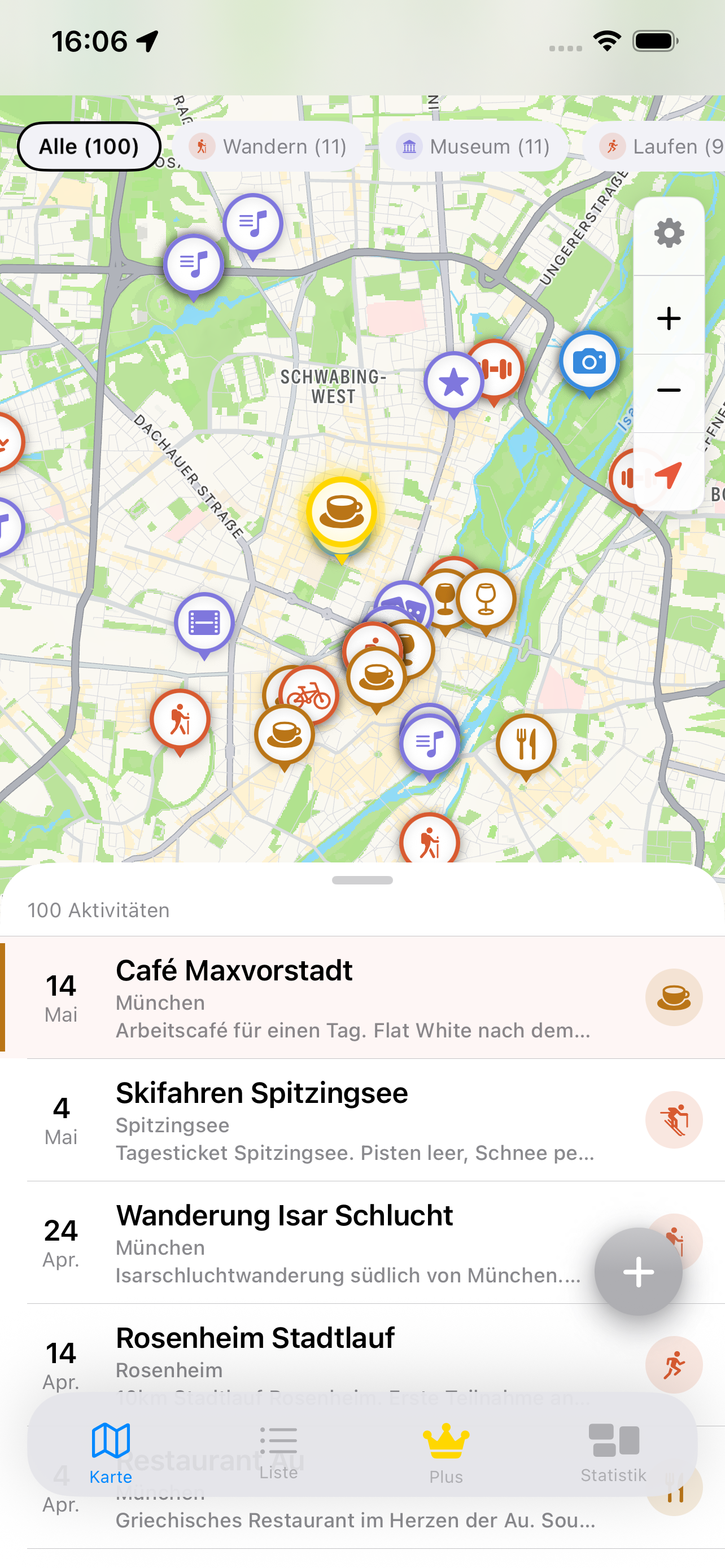
Remember brings journaling, place tracking, and activity logging together on an interactive map. Every entry, every place, every memory — in one offline-first iOS app. No subscription. No account required.
By RememberApps Studio — an indie iOS dev from the Bavarian Alps. No corporate ties, no subscriptions, no tracking of any kind. Just a personal exploration of how we hold on to the life we're living.
This project started as a question: why is it so hard to remember the good things? And it turned into a knowledge hub, a research habit, and eventually a small iOS app. All of it solo, all of it by hand.
If something here is useful to you — an article, an idea, or the app itself — that's more than enough.